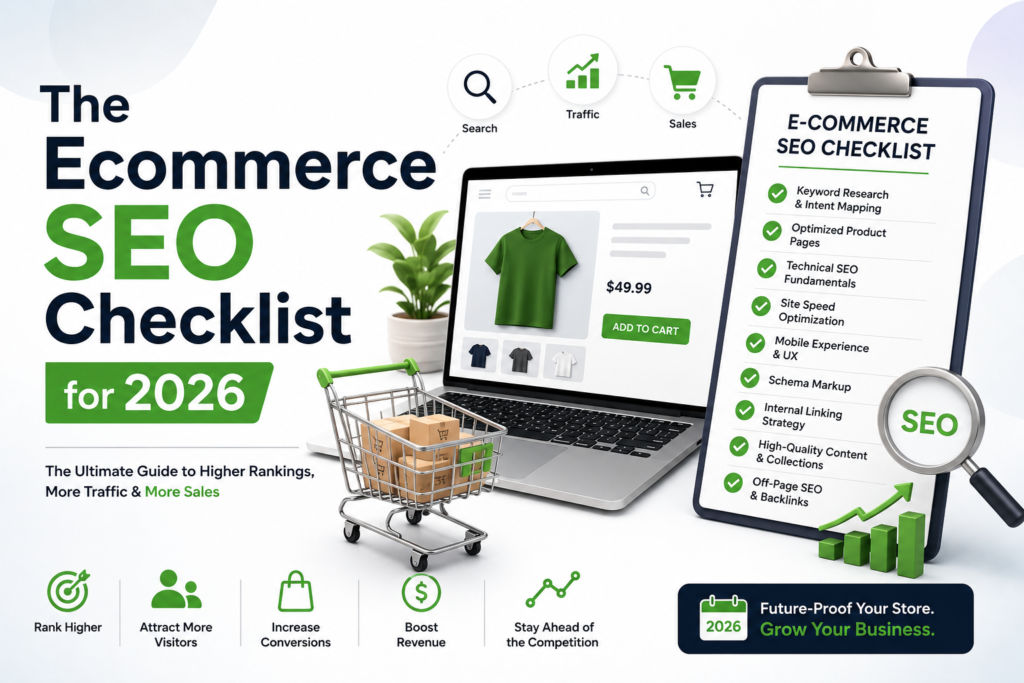
Search is changing fast. Between AI-generated answers, stricter Core Web Vitals expectations, and shoppers who research heavily before buying, ecommerce SEO in 2026 rewards stores that get the fundamentals right and adapt to how people actually find products. Use this checklist to audit your store this week and prioritize the work that moves the needle.
1. Nail your technical foundation
Technical issues quietly cap your rankings no matter how good your content is. Start here because these are usually the fastest wins.
- Fix crawl waste. Shopify auto-generates duplicate URLs (like collection filters and tag pages). Use robots.txt rules or noindex tags to keep low-value URLs out of the index so Google spends its crawl budget on pages that convert.
- Clean up your URL structure. Shopify forces
/products/and/collections/paths, but keep handles short, keyword-focused, and human-readable. Avoid changing URLs without 301 redirects. - Audit redirects and 404s. Run a crawl with Screaming Frog or Ahrefs monthly. Redirect any 404s that have backlinks or ranked historically.
- Check your XML sitemap. Make sure it only includes indexable, canonical pages and is submitted in Google Search Console.
2. Pass Core Web Vitals (again)
Page experience still matters, and slow stores lose both rankings and sales. Test your top templates—home, collection, product, cart—in Google’s PageSpeed Insights.
- Compress and serve images in WebP or AVIF. Lazy-load anything below the fold.
- Audit your apps. Every app that injects JavaScript adds load time. Remove any you no longer use.
- Aim for a Largest Contentful Paint under 2.5 seconds and minimal layout shift. Set explicit dimensions on images and ad slots to prevent content jumping.
- Test on mobile first—that’s where most of your traffic and Google’s evaluation happen.
3. Optimize product and collection pages
These are your money pages, and most stores under-optimize them badly.
- Write unique product descriptions. Manufacturer copy is duplicated across dozens of sites. Rewrite descriptions to answer real buyer questions: fit, materials, use cases, care, sizing.
- Optimize title tags and meta descriptions. Include the primary keyword plus a differentiator (free shipping, size range, best-for). Keep titles under about 60 characters.
- Build out collection pages with intro copy. A 100–200 word block above or below products, targeting the category keyword, helps these pages rank for high-intent searches.
- Use descriptive image alt text. It helps accessibility, image search, and gives context to AI crawlers.
4. Add and maintain structured data
Schema markup is more important than ever because AI systems and rich results rely on it to understand your catalog.
- Implement Product schema with price, availability, and review ratings so you qualify for rich snippets.
- Add Breadcrumb schema to improve how your URLs display in search.
- Use FAQ and Organization schema where relevant.
- Validate everything in Google’s Rich Results Test and monitor for errors in Search Console.
5. Optimize for AI search and answer engines
A growing share of product research now happens inside AI assistants, Google’s AI Overviews, and answer boxes. To get cited and surfaced:
- Write clear, direct answers to common questions. AI models pull concise, well-structured content.
- Use question-based headings and short, scannable paragraphs.
- Keep product data accurate and consistent across your site, Google Merchant Center, and marketplaces—AI cross-references sources.
- Build topical authority with buying guides and comparison content that answer “best,” “vs,” and “how to choose” queries in your niche.
6. Build content that captures buying intent
Product pages alone can’t rank for everything. Informational content brings in shoppers earlier in their journey.
- Create buying guides, comparison posts, and how-to articles that link internally to relevant collections and products.
- Target long-tail, low-competition keywords with clear commercial intent.
- Update older posts every 6–12 months—refreshing content is often easier than writing new pieces and Google rewards freshness.
7. Strengthen internal linking
Internal links distribute authority and help Google understand your site structure.
- Link from blog posts to the products and collections they mention.
- Add “related products” and “complete the look” sections.
- Make sure every important page is reachable within three clicks of the homepage.
8. Earn quality backlinks and reviews
Authority still drives rankings, and trust signals matter more as competition grows.
- Pitch products to gift guides, niche blogs, and journalists (try HARO-style platforms).
- Collect and display genuine customer reviews—they add fresh, keyword-rich content and support Product schema stars.
- Reclaim unlinked brand mentions and fix broken links pointing to your site.
9. Track the right metrics
Don’t optimize blind. Set up monitoring so you can see what’s working.
- Use Google Search Console to track impressions, clicks, and average position by query and page.
- Watch for pages losing rankings after algorithm updates and prioritize fixes.
- Connect SEO traffic to revenue in GA4 so you invest in the categories that actually sell.
Where to start today
If you only have a few hours this week, run a PageSpeed test on your product template, rewrite the descriptions on your ten best-selling products, and confirm Product schema is firing correctly. Those three actions touch speed, content quality, and rich results—the pillars of ecommerce SEO in 2026. Work through the rest of this checklist over the coming weeks, and you’ll build a store that ranks with shoppers and the AI tools they increasingly rely on.